Last updated November 18, 2026
Free written scope consultation - allowances, timeline, and change-order rules on paper before a single trade is scheduled
The Complete Driveway & Pavers Guide for Inglewood Homeowners
Most paver failures in Southern California aren’t a material problem. They’re a base failure that became visible three rainy seasons after install, long after the crew packed up and the final payment cleared. In Inglewood, expansive clay soils make that timeline even shorter when contractors skip the geotextile layer or shave the base depth to save a day of labor. The surface looks beautiful on handoff. Then the first wet winter arrives, the clay swells, and the pavers begin to heave, settle, and rock underfoot. This guide walks you through every decision that actually determines whether a driveway lasts 8 years or 30: subgrade prep, base depth for Inglewood’s clay, drainage slope for flat lots, joint sand selection for marine-layer moisture, and how to read a manufacturer’s technical data sheet before you sign anything. By the end you’ll know how to evaluate a paver bid the way a contractor does.
Quick Answer
A driveway or paver installation in Inglewood should be built on a compacted base deeper than standard inland Southern California specs because of the city’s expansive clay soils, with a geotextile separation layer, a drainage slope that meets LA County stormwater requirements, and a sand-set joint compound suited to marine-layer moisture cycles rather than dry-lay polymeric sand. Material choice (concrete pavers, travertine, or permeable interlocking concrete) comes after those base decisions, not before. Get the base wrong and no paver brand will save the job.
Styles & brands we work with
- Kitchen remodeling
- Bathroom remodeling
- Home additions & ADU
- Roofing
- Windows & doors
- Driveway & pavers
- Fence
Table of Contents
- Why Inglewood’s Soils Change the Whole Equation
- How Deep Should the Base Go? Inglewood Base Depth Explained
- Material Comparison: Concrete Pavers vs. Travertine vs. Permeable Interlocking Concrete
- Drainage and Slope Requirements for Flat-Lot Inglewood Neighborhoods
- Joint Sand and Moisture: Why Inland Specs Fail Here
- How to Read a Paver Manufacturer’s Technical Data Sheet
- Sealer Selection for High-UV, Marine-Layer Conditions
- What a Typical Inglewood Paver Project Costs and How It Runs
Why Inglewood’s Soils Change the Whole Equation
Generic paver guides are written for a national audience, which means they assume average soil and average moisture. Inglewood is neither average. Much of the city sits on expansive clay soils that swell when wet and shrink when dry, and the marine layer rolls in most mornings for a good part of the year, keeping surface moisture levels cycling far more often than in the drier inland valleys to the east. That combination is the single biggest driver of paver failure in Inglewood, and it’s the thing most bids never address.
Here’s what actually happens. Water gets under the pavers through the joints or the edges. The clay beneath the base layer absorbs it and expands. The base layer, if it’s too thin or poorly compacted, has no way to resist that upward pressure. Pavers lift slightly. Then the dry season arrives, the clay shrinks, a void opens under the base, and the pavers settle into it. Walk across that section and you feel the rock. Three or four seasons of this and the joints open, weeds move in, and the driveway that “should have lasted 30 years” is being torn out.
A proper Inglewood installation treats the soil as the adversary it is. That means:
- A geotextile separation layer between the native clay and the aggregate base, so fines don’t migrate upward and the base doesn’t lose its structural integrity.
- A compacted base depth that accounts for expansive soil movement, not a one-size spec pulled from a manufacturer brochure written for stable ground.
- Edge restraint that actually holds, because expanding clay pushes laterally as well as upward.
- Drainage planned at the excavation stage, not added later as a scupper or a trench drain bolted onto the finished surface.
If a contractor hands you a bid with a base depth and no mention of soil conditions, geotextile, or compaction testing, that’s your signal. In Inglewood, the base is the job.
How Deep Should the Base Go? Inglewood Base Depth Explained
Standard Southern California paver spec sheets often call for a 4-inch compacted aggregate base for a residential driveway, with 6 inches for heavier loads. For most of Inglewood’s clay-heavy lots, that number is too thin. We specify base depths that start deeper than the generic spec and increase with subgrade condition, because the clay beneath is going to move and the base has to be the rigid layer that absorbs that movement without telegraphing it to the surface.
Base depth isn’t something to eyeball. It’s a number you should see written in the bid and verify during the job. Here’s the sequence a properly built Inglewood driveway follows:
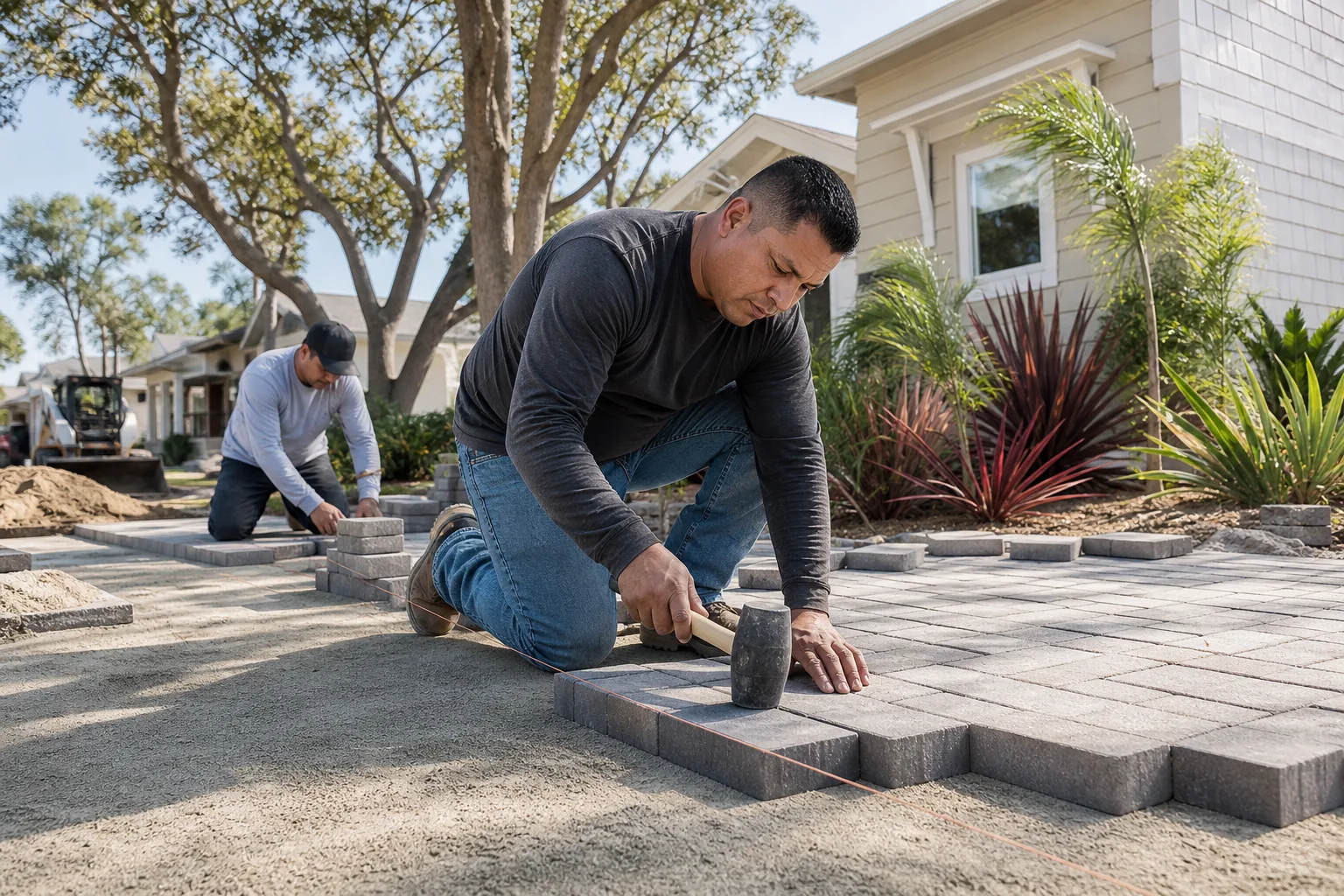
- Excavate to full depth. Remove existing concrete, asphalt, or soil down to the planned subgrade, allowing for base plus bedding sand plus paver thickness. Half-measures here come back as settling.
- Proof-roll and inspect the subgrade. Soft spots get excavated and replaced. Expansive clay that’s visibly cracking or heaving gets addressed before anything new goes on top.
- Lay geotextile. A non-woven separation fabric goes down over the clay to stop fine particles from pumping up into the base under load and moisture cycling.
- Place aggregate base in lifts. Base goes down in lifts of a few inches at a time, each one watered and compacted before the next. Dumping the full depth and compacting once doesn’t achieve the same density.
- Compact to density. Plate or roller compaction, checked with a proof-roll or density test, not just “it looks tight.”
- Set edge restraint. Concrete edge restraint, pinned and set on the compacted base, so the pavement can’t spread under load or clay movement.
- Bed and lay pavers. A thin layer of bedding sand, screeded flat, pavers laid to the pattern, cut to fit at edges.
- Compact and sand the joints. Vibratory plate over the finished field, then joint sand worked into the gaps.
The exact base depth for your property depends on subgrade condition, traffic (a passenger car driveway vs. a heavier vehicle), and whether the existing soil has already been disturbed. That’s a site-specific call. What’s not negotiable is that it exceeds the generic inland spec and that it’s written into the contract with compaction requirements spelled out.
Material Comparison: Concrete Pavers vs. Travertine vs. Permeable Interlocking Concrete
Once the base is right, material choice is where Inglewood homeowners get real design freedom. The city’s climate is freeze-free but high-UV and moisture-cycling, which narrows the list to materials that hold color under sun and handle repeated wet-dry cycles without spalling, staining, or surface degradation. Three categories dominate the conversation.
Concrete Pavers
The workhorse choice. Interlocking concrete pavers from brands like Belgard, Unilock, Techo-Bloc, Tremron, Cambridge Pavers, and Oldcastle offer the widest design range and the most proven durability in the Southern California market. They resist UV fading well, handle vehicle traffic without issue, and individual units can be lifted and replaced if one ever cracks or the base under a single spot needs attention. For most Inglewood driveways this is the default for good reason.
- Strengths: Broad color and texture range, repairable unit by unit, proven under sun and moisture cycling, compatible with permeable joint systems.
- Watch for: Efflorescence (a whitish surface bloom that’s cosmetic and weathers off), color variation between production runs, and quality differences between brands.
Travertine
Travertine pavers bring a natural stone look that concrete can approximate but not fully match. They stay cooler underfoot than concrete in direct sun, which matters on a west-facing Inglewood driveway. The trade-off is that natural stone is more sensitive to install quality: a rock-solid, well-drained base is even more critical, and joint sand selection matters more because travertine has a porous surface that wants to hold moisture.
- Strengths: Genuine stone appearance, cooler surface temperature, strong UV stability, high perceived value.
- Watch for: Pitting and fill variation inherent to natural stone, higher material cost, and the need for a sealer that lets the stone breathe.
Permeable Interlocking Concrete
Permeable pavers have open joints or drainage channels designed so stormwater passes through the surface into a base reservoir and then into the soil or a drainage system. For Inglewood properties with poor drainage or a flat lot that ponds, this is often the right answer. It also aligns with LA County’s stormwater compliance direction, which increasingly favors on-site infiltration over sending runoff to the street.
- Strengths: Manages stormwater on-site, reduces ponding, meets low-impact development goals, and uses the same proven concrete paver materials.
- Watch for: Open-graded base aggregate (not standard base), proper reservoir depth, and periodic sweeping to keep the joints from clogging with debris.
There’s no universally “best” material here. The right call depends on your lot’s drainage, sun exposure, budget, and design goals. What matters is that the material choice is matched to a base design built for Inglewood’s soil, not dropped onto a generic spec.
Drainage and Slope Requirements for Flat-Lot Inglewood Neighborhoods
Much of Inglewood is flat, which sounds convenient until it rains and there’s nowhere for the water to go. A driveway that sheds water toward the house foundation, a neighbor’s property, or a low spot in the middle of the apron is a problem waiting to surface. LA County stormwater rules and the city’s own grading expectations push toward containing and infiltrating runoff on-site, which shapes how a driveway should be sloped and drained from the very start of the design.
The general principle is a minimum surface slope that directs water away from structures toward a planned outlet: a permeable area, a dry well or infiltration pit, a landscape strip, or a permitted connection to the storm drain system. On flat lots, that slope has to be engineered in. It’s not something you can add after the pavers are laid.
Practical drainage considerations for Inglewood driveways:
- Away from the house, always. The finished surface should pitch so water runs off toward the street or a landscape infiltration area, never toward the foundation.
- Permeable where infiltration is the goal. If your lot ponds or the runoff has nowhere to go, permeable interlocking pavers with an open-graded reservoir base let the water soak in where it falls.
- Edge restraint doubles as a drainage boundary. Properly set edge restraint keeps the field tight and helps direct surface flow rather than letting it migrate under the pavers.
- Downspout and gutter coordination. Roof runoff shouldn’t dump onto the new driveway. A downspout extension or a small trench drain tied to the drainage plan keeps water from scouring the surface.
- Check the swale and the apron. The transition from the driveway to the street should drain toward the street and not hold water against the garage door.
If a driveway contractor’s bid has no slope specified, no drainage plan, and no mention of where the water leaves the property, that’s a red flag. Under LA County’s stormwater direction, “it’ll drain to the street” isn’t a plan. It’s a shrug.
Joint Sand and Moisture: Why Inland Specs Fail Here
A paver is only as good as its joints. The sand that fills the gaps between units is what locks the whole field together, keeps weeds and ants out, and sheds surface water. In drier inland areas, a dry-lay polymeric sand is standard: you pour it, sweep it, wet it, and it cures into a hard grout-like joint. In Inglewood, that same approach can fail faster. The marine layer keeps the pavement damp for more hours of the day than you’d get twenty miles inland, and a polymeric sand that cures while the joint is still holding active moisture can cloud, crack, or wash out of the joint in the first rainy season.
The right joint compound for Inglewood’s moisture cycles is a sand-set product designed for wet-dry cycling, applied to a well-drained, well-compacted base with clean, dry joint lines and proper cure conditions. The details matter:
- Clean the joints first. Water-filled or debris-laden joints won’t accept sand properly. The field needs to be dry before joint sand goes down.
- Use the sand the manufacturer specifies for the paver. Travertine and concrete pavers have different requirements. Permeable installations use open-graded joint aggregate that allows water through.
- Work the sand into the joints completely. Sweep and vibrate until the joints are full to the top, then sweep off the excess.
- Control the cure. Some polymeric products want the joint dampened in a specific way. Doing this on a day when the marine layer is still actively depositing moisture on the pavement can ruin an otherwise good application.
- Top up after the first season. Even a good joint sand settles. A light top-up after the first wet season is normal maintenance and keeps the field locked.
Ask a contractor which joint sand they’re using and why. If the answer is “whatever the pallet came with” or “the standard polymeric,” that’s a conversation to have before the work starts. In Inglewood, joint sand is a moisture-management decision, not a color choice.
How to Read a Paver Manufacturer’s Technical Data Sheet
Every reputable paver brand publishes a technical data sheet: a one-to-two-page document that lists the product’s compressive strength, water absorption, freeze-thaw resistance, dimensional tolerances, and recommended installation specs. Most homeowners never ask for it. Reading it takes about ten minutes and tells you whether the contractor’s bid actually meets the manufacturer’s requirements. If a bid doesn’t comply with the data sheet, the manufacturer’s warranty may not apply.
Here’s what to pull from a data sheet and why it matters in Inglewood specifically:
- Compressive strength. Listed in psi or MPa. Higher is better for driveway traffic, and any paver sold for vehicular use should meet ASTM C936 requirements (the standard for solid concrete interlocking paving units). If the spec sheet cites nothing, ask.
- Water absorption. A listed percentage. Lower is better in a moisture-cycling climate. High-absorption pavers are more vulnerable to surface degradation and efflorescence.
- Freeze-thaw resistance. Even though Inglewood doesn’t freeze, this rating is a proxy for how the paver handles wet-dry cycling. A paver rated for freeze-thaw is generally more moisture-durable.
- Dimensional tolerance. Tighter tolerances produce tighter joints, which lock the field and manage water better.
- Recommended base depth and installation spec. Compare the manufacturer’s minimum against the contractor’s bid. If the contractor is below the manufacturer’s minimum, that’s a direct compliance problem.
- Warranty terms. How long the product warranty runs, what voids it, and whether it requires professional installation to a published spec. This is the reason the base matters so much: base failures void warranties.
Ask each contractor in your bid set to list the exact paver line, the manufacturer, and the model number, and hand you the corresponding data sheet. A contractor who can’t produce them is either selling house-brand material or hasn’t verified the spec.
Sealer Selection for High-UV, Marine-Layer Conditions
Sealer is the last decision and the one most homeowners get wrong in a way they can’t undo easily. The wrong sealer on a high-UV, moisture-cycling Inglewood driveway will trap moisture in the paver and cause the exact clouding, flaking, or yellowing that sealer is supposed to prevent. The priority here isn’t gloss. It’s breathability.
Here’s the framework:
- Breathable penetrating sealers soak into the paver surface and leave it able to release moisture vapor. For concrete pavers and travertine in a marine-layer climate, this is generally the safer choice, especially in the first few years after install.
- Film-forming sealers (acrylic, glossy topcoats) sit on the surface and can lock moisture in. Under high UV, the film degrades and can chalk or peel. If a film-forming sealer is used at all, it should be UV-stabilized and applied only after the pavement has fully dried and cured.
- Solvent-based vs. water-based. Water-based products are more breathable and better suited to a damp environment. Solvent-based products offer stronger color enhancement but cut breathability, which is a real trade-off here.
- Test a small area first. A patch of a few pavers in a less visible spot, sealed and observed through a wet cycle, tells you more than any product claim.
- Honest expectation setting. Sealer is not a permanent coating. Depending on the product and traffic, it needs reapplication, and a poorly chosen sealer will need to be chemically stripped before it can be replaced.
Ask which sealer the contractor plans to use and whether it’s breathable. If the answer is “matte acrylic, standard,” ask whether it’s UV-stabilized and whether it’s rated for a damp installation. There are right answers to those questions, and a contractor with Inglewood-specific experience will have them ready.
What a Typical Inglewood Paver Project Costs and How It Runs
Paving prices vary significantly in Inglewood, and we don’t publish misleading per-square-foot numbers because the real cost depends on excavation depth, base requirement, material, drainage scope, and access. The honest process is a free written estimate taken on-site, line-item by line-item, so you know exactly what you’re paying for. What we can tell you is how a well-run driveway project typically runs, so you can compare bids on the same terms.
The typical timeline
- Site visit and written estimate. Free, on-site, with a line-item scope that names base depth, material, edging, drainage, and clean-up.
- Permits, if required. Your city’s building department governs this. Ask before you sign. Inglewood and LA County have specific stormwater and grading expectations for hardscape work.
- Demolition and excavation. Existing surface removed and hauled. Subgrade cut to full planned depth.
- Subgrade inspection and geotextile. Clay subgrade assessed for soft spots, fabric laid down.
- Base placement and compaction. Aggregate placed in lifts, each compacted and checked before the next. This is the longest and most important stretch of the job.
- Edge restraint and paver installation. Pavers laid to the chosen pattern, cuts made at edges, field compacted, joint sand installed.
- Final grading and clean-up. Surface checked for slope and drainage, site cleaned, waste removed.
- Post-install care. Joint sand top-up after the first wet season; sealer decision made on the right timeline.
What to verify in every bid
- Base depth written in inches, with compaction method named.
- Geotextile separation layer included (not an upgrade line item).
- Exact paver brand, line, and model, with the manufacturer’s data sheet attached.
- Joint sand product named.
- Edge restraint type and specification.
- Drainage plan and slope explicit.
- Permit responsibility clear.
- Workmanship warranty in writing.
Free estimates, written line-item quotes, permits pulled where the municipality requires them, and a fixed price with no change orders after work begins are the standard we hold. Whether you hire us or anyone else, those should be your baseline demands.
Common Mistakes to Avoid
- Skipping the geotextile to save a day. On Inglewood’s clay, the fabric layer is what keeps the base from pumping fines and breaking down under moisture cycling. It’s not a luxury, and a bid that omits it is a bid that’s planning a shorter-life driveway.
- Accepting a standard 4-inch base on clay soil. A generic inland spec doesn’t account for expansive clay movement. Base depth should be sized to your subgrade and traffic, not pulled from a generic brochure.
- Using dry-lay polymeric sand in a marine-layer zone. It can cloud, crack, or wash out when it cures against active moisture. Match joint sand to the local moisture cycle.
- Ignoring drainage on a flat lot. If the bid has no slope and no outlet plan, you’re one wet season from ponding against the foundation or under the garage door. LA County stormwater rules push toward on-site management, and that has to be designed in.
- Picking the paver before the base. Material samples are fun, and the base is what actually determines whether the driveway lasts. Choose the material, then require a base design that supports it.
- Never asking for the data sheet. A paver line without a technical data sheet is a paver you can’t verify. Compressive strength, water absorption, and installation specs are your leverage at the bid stage.
- Sealing with whatever’s cheapest. A gloss sealer that traps moisture under high UV in a damp climate will flake, cloud, or yellow. Breathability beats shine here.
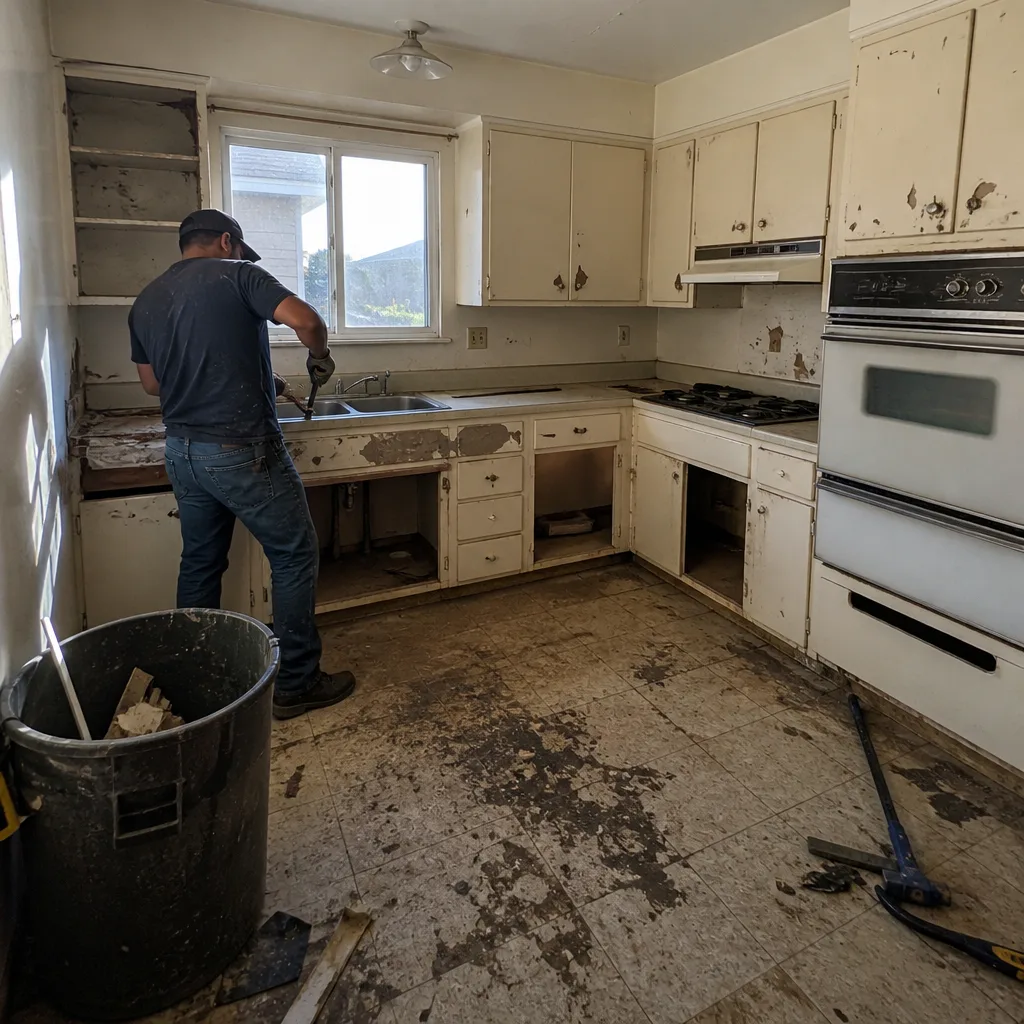
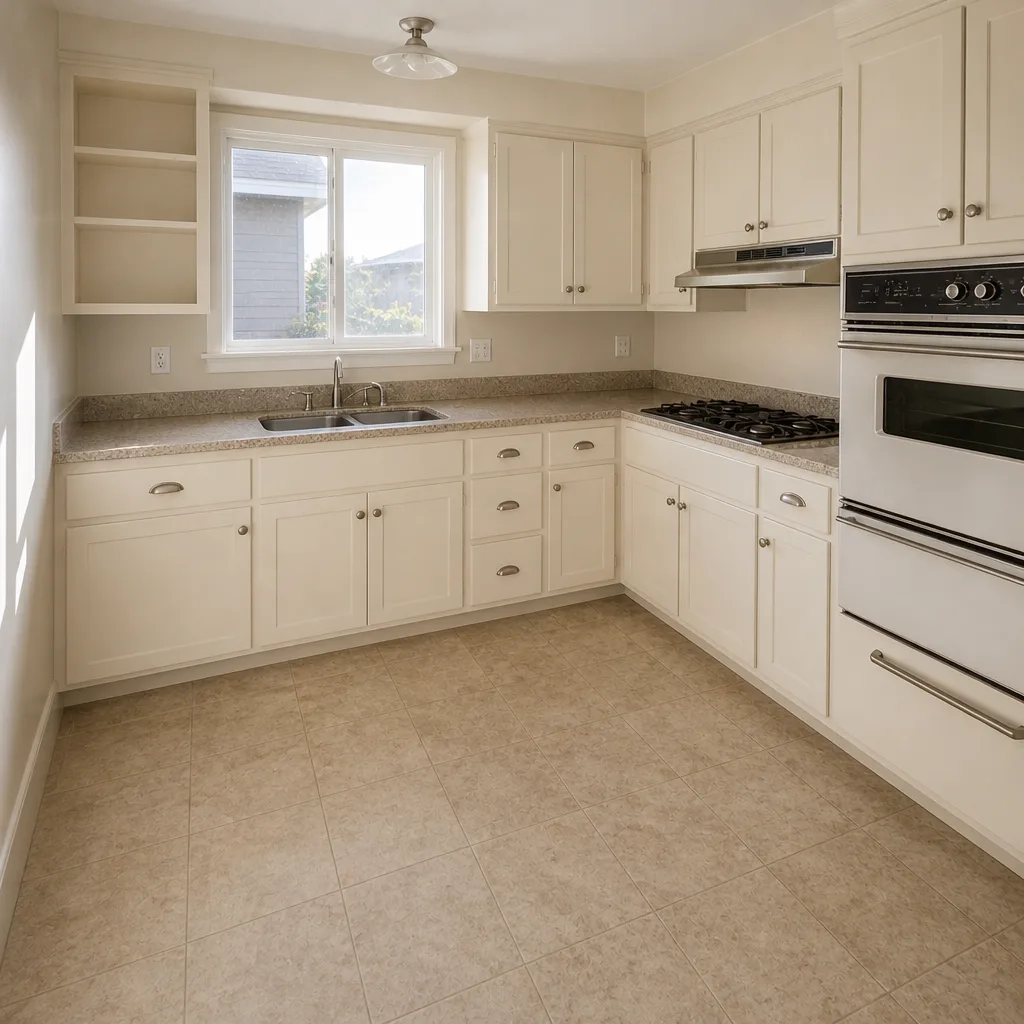
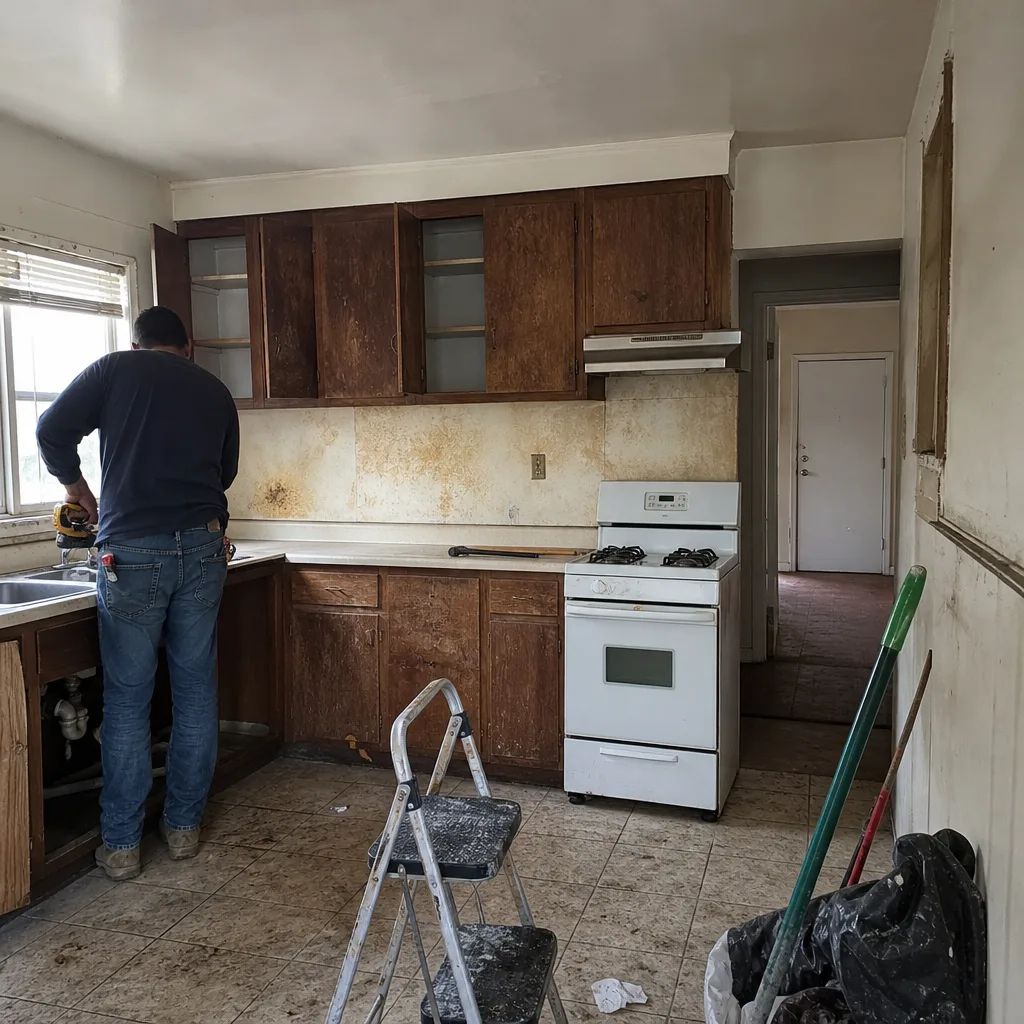
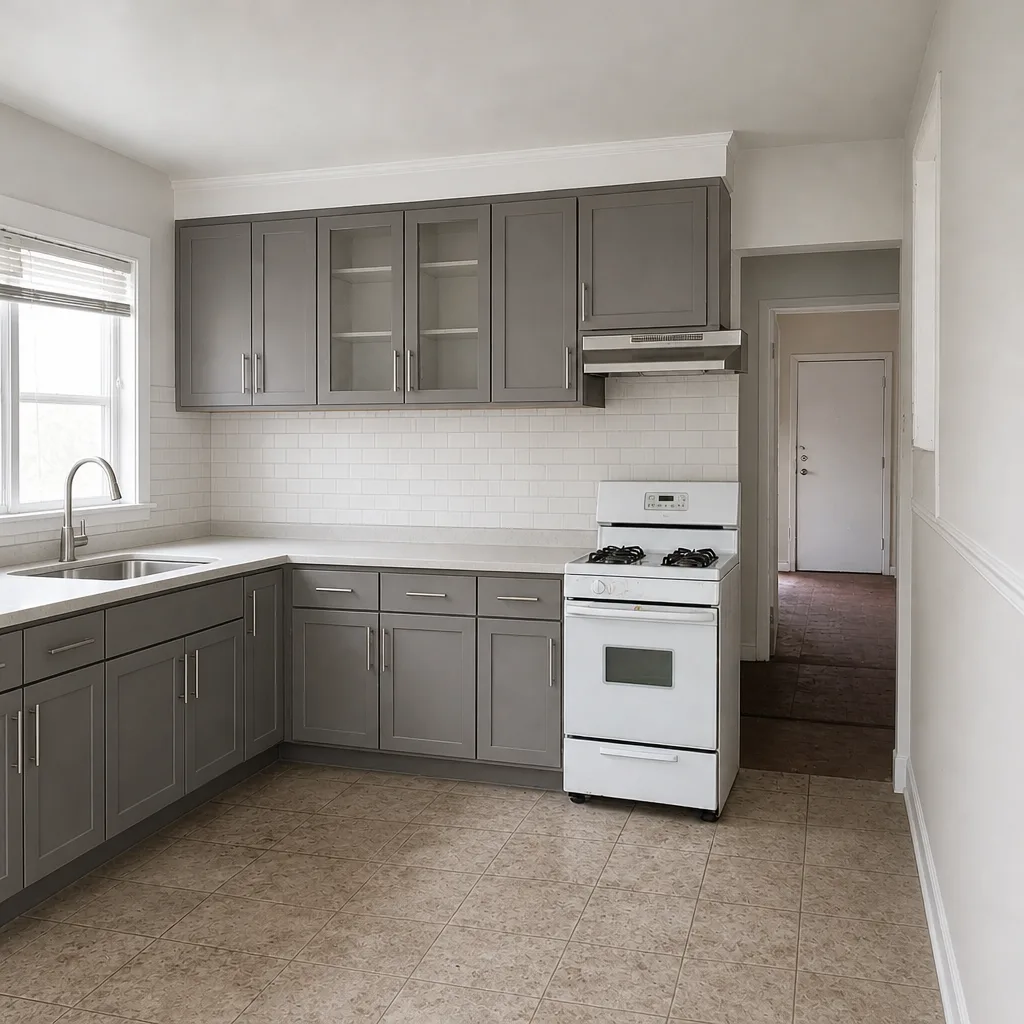
See the difference
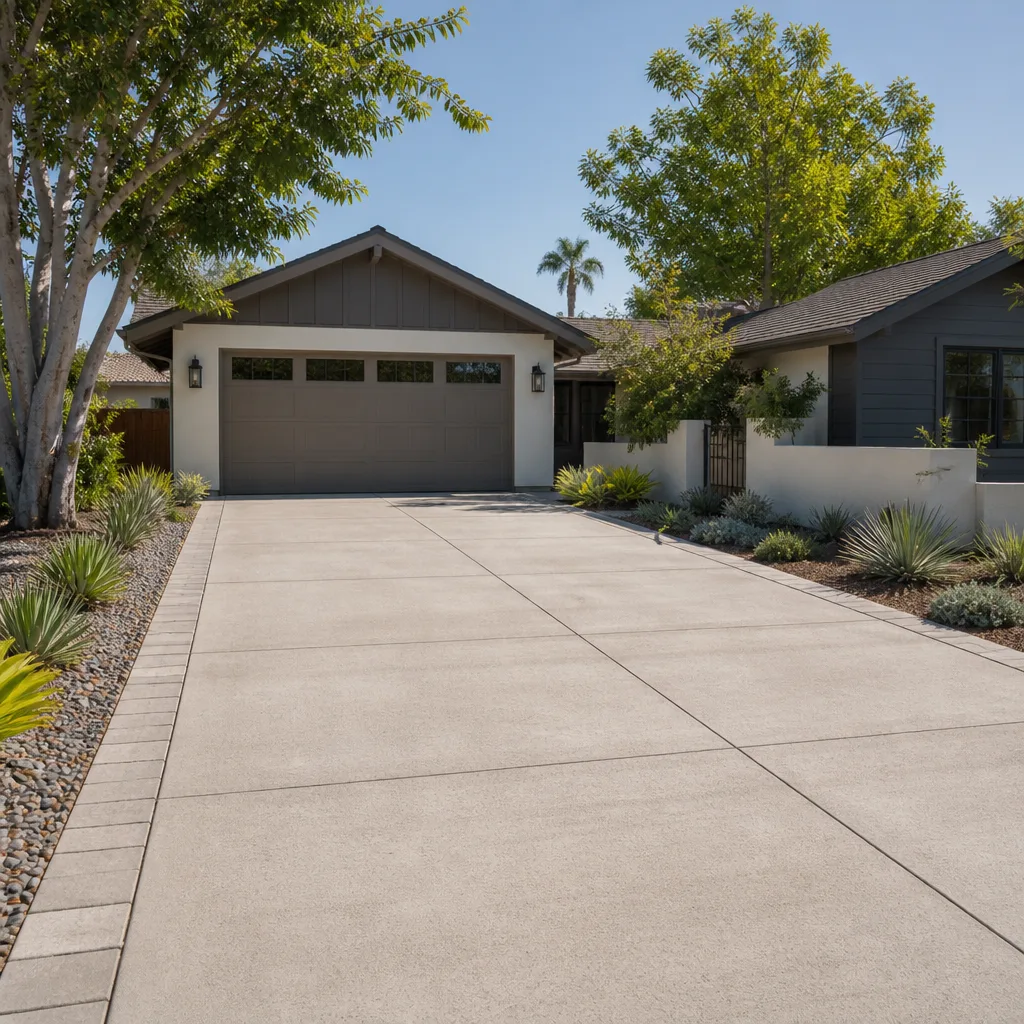
 Before
 After
 Before
 After
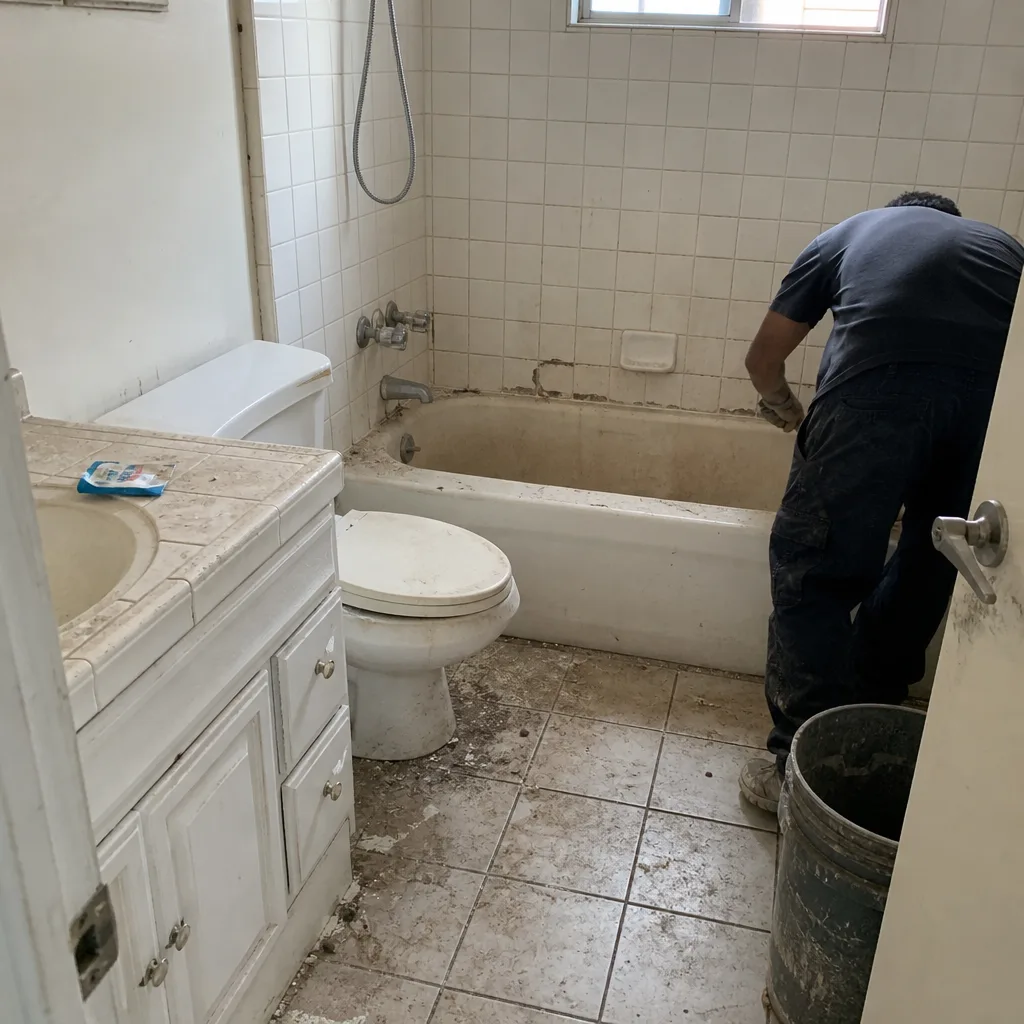 Before
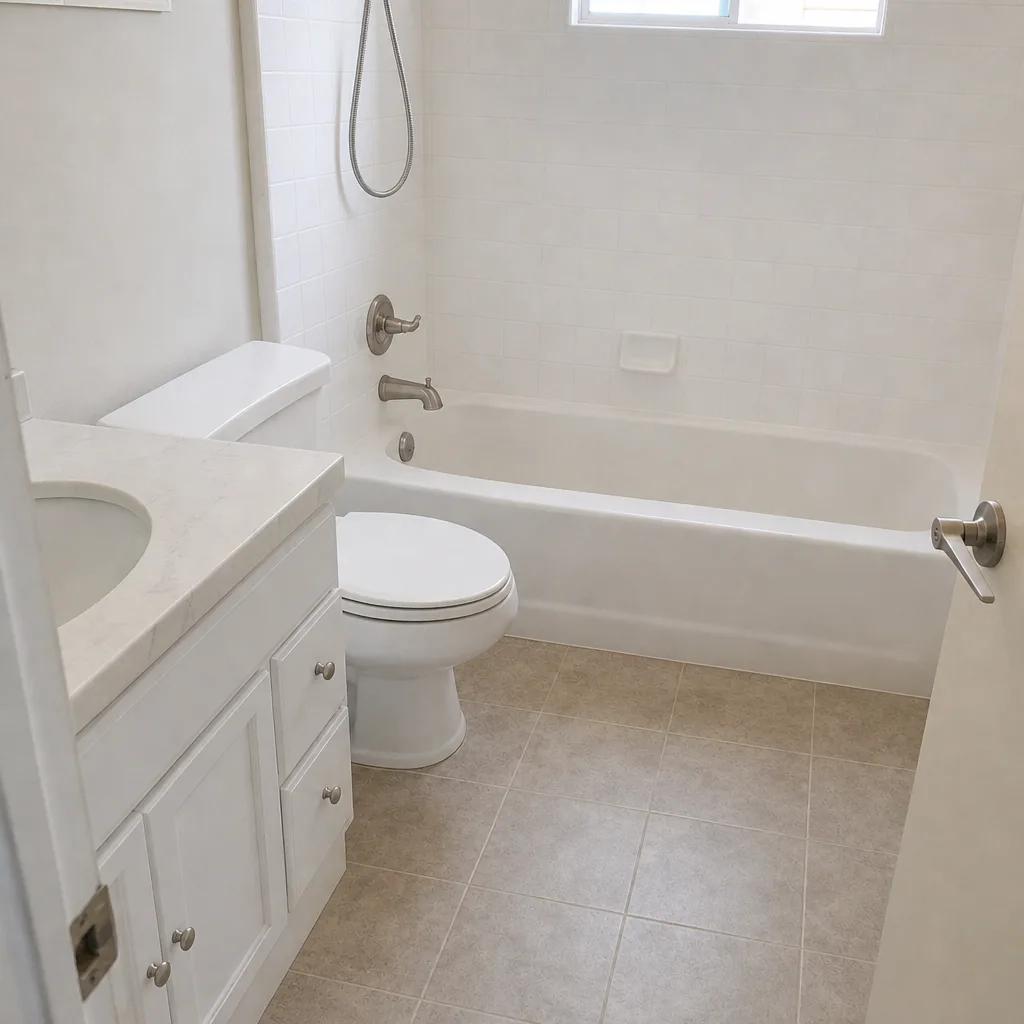 After
When to Call a Professional
Some driveway projects are genuinely DIY territory: patching a hairline crack, topping up joint sand after the first season, or extending a downspout away from the surface. Anything below the surface is not. If you’re seeing pavers heaving, rocking, or settling unevenly, the base has already moved and no amount of new sand will fix it. If your driveway ponds against the house or the garage door, that’s a drainage and slope problem that has to be excavated and re-engineered. If you’re starting fresh, replacing failed concrete, or adding a permeable driveway to meet stormwater expectations on a flat Inglewood lot, the base design and drainage plan are too critical to wing. Construction Inglewood offers free estimates in Inglewood. Call (844) 320-4724. We answer 24/7, with fast dispatch from 7am to 7pm, Sunday through Friday. Whether it’s driveway & pavers or a larger exterior project, our technicians have up to 14 years of experience, and the estimate is always free and always in writing.
Frequently Asked Questions
Costs vary significantly based on driveway area, base excavation depth, material choice, drainage scope, and site access, so there’s no honest single per-square-foot number we can put here. What we can tell you is that the free written estimate sets the price: it’s line-item, names the base depth, material, edging, drainage, and permits, and doesn’t change after work starts. Call (844) 320-4724 to schedule your free on-site estimate.
Not without addressing what’s under the concrete. In Inglewood’s expansive clay, an overlay trap-moisture layer is the fastest route to pavers that heave and settle within a few seasons. The right approach is to remove the existing slab, inspect and prepare the subgrade, lay geotextile, and build the base correctly. In some cases an overlay is possible with specific drainage measures, but that’s a site-specific call. Call (844) 320-4724 for a free estimate on your specific driveway.
Often yes, especially when the project changes lot drainage, hardscape coverage, or grading. Permit rules are set by the city and by LA County stormwater requirements, so ask the building department directly for your address. A written bid should say clearly who’s pulling the permit. We pull permits where required, and we’re happy to walk you through that before you sign. Call (844) 320-4724 for a free estimate.
Most residential driveways take several working days, and the base work is what drives the timeline. Excavation, base placement in lifts, compaction, edge restraint, and joint sand all have to be done correctly, and rushing them is how driveways fail early. Weather and site access affect the schedule too. The written estimate gives you the expected timeline up front. Call (844) 320-4724 to get a real timeline for your property.
No. Our written, line-item estimate sets the price, and we don’t do change orders after work starts. That’s why we do a full on-site estimate and name every component before you sign. If something unforeseen turns up underground, we stop and talk to you first, not after the fact. Free estimates, fixed pricing. Call (844) 320-4724 to schedule yours.
For most Inglewood installations, a sand-set joint compound designed for wet-dry cycling outperforms dry-lay polymeric sand, because the marine layer keeps the pavement damp for more hours of the day than it does inland. The right product depends on the paver material: travertine and concrete pavers have different requirements, and permeable installations use open-graded aggregate. Ask any contractor which joint sand they’re using and why. Call (844) 320-4724 for a free estimate that names the product.
The Bottom Line
Inglewood driveway failures are base failures, and the drivers are specific to the city: expansive clay that swells and shrinks with every wet-dry cycle, marine-layer moisture that makes joint sand selection a real engineering decision, and flat lots that demand a designed drainage slope to meet LA County stormwater expectations. Get those three things right, choose the paver material to fit the base and the site, verify the manufacturer’s data sheet against the contractor’s spec, and use a breathable sealer, and you’re building a driveway that can last decades rather than a surface that looks great on handoff and starts rocking in three years. Whether your project is a driveway replacement, a new permeable system, or a larger exterior upgrade that ties a fence, a patio, and a driveway together, Construction Inglewood handles it under one contractor relationship, with materials from named brands like Belgard, Unilock, and Techo-Bloc, not generic supplies. If your project also includes fence installation to match the hardscape or a home additions & ADU plan that will affect the driveway approach, we can scope it all together so the base, the drainage, and the finished surface are designed as one system instead of three separate projects.
Contact
Call (844) 320-4724 for a free estimate. We answer 24/7, with fast dispatch from 7am to 7pm, Sunday through Friday. Every quote is line-item and written, permits are pulled where the city requires them, and the price is fixed once you sign. Whether you’re planning a full paver driveway replacement, a drainage overhaul on a flat lot, or a driveway that ties into a larger exterior upgrade, we’ll walk the site with you and put real numbers on the page. Free estimates. One project, one point of contact.
Written by the team at Construction Inglewood.